The Ultimate Guide to Vitamin C Serum: Benefits, Uses, and Tips

5 min read

IN THIS ARTICLE
- 01
We are always in search of viable and effective skincare solutions. These days, the market is flooded with many products derived from a variety of ingredients. One such is our personal favorite, Vitamin C, which is proven to be effectively beneficial for all skin types. From brightening the skin to fighting signs of ageing and stimulating collagen production, Vitamin C does it all.
It is available in the form of facial serums, gels, and even creams these days, which can be incorporated into your daily skincare routine. Moreover, ingesting Vitamin C is also effective along with topical application to achieve promising results.
We’ve answered all the burning questions going through your mind about Vitamin C serum, its benefits, side effects, types, what to mix & whatnot, and much more. Check them out right here!
What is Vitamin C?
Starting with the most basic question: What’s Vitamin C? Well, it is a potent antioxidant that helps to fight the signs of ageing, fine lines, and wrinkles. It is also called L-ascorbic acid and is a water-soluble, lightweight vitamin that naturally occurs in various citrus fruits.
The human body and even animals are unable to naturally synthesize the vitamin and hence require supplements and topical application to reap its benefits. It is essential for the growth, development, and repair of body tissues. One can derive it from their daily diet by intaking citric fruits or in the form of supplements. Other than that, many topical products have this ingredient in them, and they are equally effective.
What are the benefits of Vitamin C serum?
Vitamin C serums have gained immense popularity over the years for their many benefits. All these benefits together make it a potent choice for all skin types. Here are a few benefits which are universal to all skin types and can persuade you to include Vitamin C face serum in your skincare routine:
- Vitamin C face serums are mild and safe enough for most skin types. They are also suitable for use along with other soothing skincare ingredients such as Niacinamide, Vitamin E, and Hyaluronic acid.
- It is extremely hydrating in the form of ascorbic acid and is absorbed thoroughly through topical application. It also helps to reduce transepidermal water loss or TEWL and helps the skin retain moisture better.
- Vitamin C face serum helps to fade hyperpigmentation over time and eventually leaves it much brighter and even-toned.
- When the correct formulation is used, it soothes irritated skin and reduces redness as it acts as an antioxidant. It also neutralizes the free radicals that lead to oxidative damage.
- Vitamin C helps to reduce melanin production, which in turn reduces hyperpigmentation. It contains an enzyme known as tyrosinase which is used for treating hyperpigmented spots.
- Vitamin C promotes collagen production by accelerating collagen synthesis in the body. Over the years, collagen synthesis slows down, which leads to ageing.
- When you pair Vitamin C with sunscreen in the daytime, its efficacy is increased, and your skin is protected from sun damage.
- Vitamin C serum, when used as an eye cream, can be proven highly beneficial in targeting fine lines, wrinkles, and other concerns.
Read More: Benefits of Using Vitamin C Serum
What are the side effects of Vitamin C?
Everything has a good and a bad side to it. Vitamin C is packed with many benefits but has a few side effects as well. It is a generally well-tolerated ingredient and is considered safe for all skin types. It does not cause any side effects on most skin types, but sensitive skin has always had its limitations.
Those with sensitive skin types often experience irritation, redness, and itchiness when exposed to Vitamin C. However, it all comes down to the strength and composition of the Vitamin C face serum. High vitamin C concentration can adversely affect extremely sensitive skin when used incorrectly. Hence, it is important to always start with low concentrations and then make your way up to higher, more effective, and safe formulations.
Another side effect that many users complain about is the yellowing effect of the skin and other surfaces with which it comes in contact. It can cause stinging and dryness though these are extremely rare symptoms.
Caution should be taken, especially when it is being used under the eyes. In short, the side effects are mostly witnessed in the sensitive skin type. Therefore, by choosing the right variant and concentration of Vitamin C serum carefully for your skin, you can avoid these side effects.
Read More: Mistakes to Avoid While Using Vitamin C Serum
How to use vitamin c serum?
1)Cleanse your face
Whether you’ve spent the entire day out with friends or doing work, it must have tired you out. But along with you, there is also an organ that is exhausted. From facing pollutants and gathering dirt and grime throughout the day, it needs a fresh cleanse to revitalize it. That's your skin. It is very important to use a cleanser that will remove all the dirt but be gentle while doing so. You can include Foxtale's Daily duet cleanser to help unclog pores and leave you with glowy skin.

Buy Now: Rs 349/-
2) Apply the vitamin C serum
Now that your face is a fresh canvas for you to layer all the products in, you can start your routine by applying the vitamin C serum. Do your skin a favor and use Foxtale's C for yourself vitamin C serum. Not only will it make your skin appear younger, but it will also protect you from sun damage.

Buy Now: Rs 595/-
3) Use a moisturizer
With winter officially here, your skin needs extra care and nourishment. Using a moisturizer is important as it will help in locking in moisture, keeping it hydrated for a long time. Incorporating Foxtale's ceramide supercream will help give a smoother skin texture and maintain its barrier.
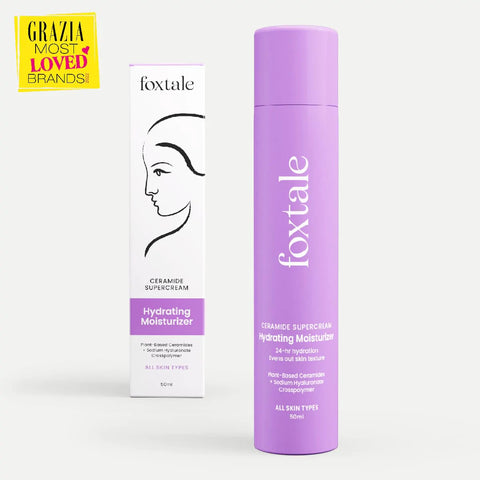
Buy Now: Rs 445/-
4) Protect with SPF
Your entire skincare routine will be ineffective if you don't apply sunscreen. When you're out in the sun the entire day, you are exposing yourself to harmful UV rays, which can have a harmful impact on the skin. Protecting yourself with sunscreen, like Foxtale's dewy finish sunscreen, will shield your skin from UVA+ UVB rays and reverse free radical damage.

Buy Now : Rs 675/-
Conclusion
Vitamin C serum can benefit numerous skin types and is regarded as a great weapon to possess against anti-ageing. Incorporating the serum into your skincare routine offers you a plethora of benefits, from fading hyperpigmentation to promoting collagen production; this versatile ingredient deserves a place in your skincare cupboard. To be on the safer side, it is recommended to conduct a patch test first to ensure your skin has no adverse reaction to the product. Always ensure to pair Vitamin C serum with sunscreen to reap the maximum benefits!
FAQs
1. At what age can I start using Vitamin C?
Ans: To be honest, there is no right age at which you can start using Vitamin C serum in your skincare routine. A teenager’s skin is a lot more different than an adult's or an aged person, and it’s safe to say both can benefit from Vitamin C serums, given their target concerns. If you feel the need to prevent sun damage or have acne scars that you want to fade, use a Vitamin C serum, and you can easily benefit from it, be it at the age of 18 or 40!
2. What % of vitamin C should be used?
Ans: It is recommended to use Vitamin C serum which contains 15% L-ascorbic acid, which is the purest and most potent form of the vitamin. In addition, products containing L-ascorbic acid penetrate skin tissue and boost the skin's collagen production, giving your skin a youthful appearance.
3. How to store vitamin C serum?
Ans: Vitamin C serum should be stored in a cool and dry place to prevent it from oxidizing. You should aim to avoid exposing your serum to sunlight.
4. How long does Vitamin C serum take to work?
Ans: It usually depends on the type of Vitamin C you are using; it can easily take around 1 to 4 months or 4 to 12 weeks for it to work and show results. While L-Ascorbic Acid works faster, other variants might take longer than that. However, consistency and concentration in using a product play an important role in efficacy. For example, if you use high concentrations regularly and top it off with good sunscreen, it will give you faster results.
5. How do I choose Vitamin C serum for my skin?
Ans: Based on your skin type, skin tolerance, preference of formulation, and skin concern, you can choose the best Vitamin C serum for your skin. For mostly all skin types, L-Ascorbic acid is great and works faster as it is a pure and potent formula. However, if you struggle with very sensitive skin, you might have other options.
If you are a beginner using Vitamin C serum and your skin cannot tolerate high concentrations, go for a serum with no more than 5% concentration to start with. Similarly, if your skin is used to it and can tolerate a high percentage, go for 15-20% concentration, as lower than that may not work for you.
6. What can you not mix with Vitamin C?
Ans: You should not mix Retinol, Benzoyl peroxide, AHA’s, and BHA’s with your Vitamin C.
7. Should you put Vitamin C on wet skin?
Ans: Although it is always advisable to use your skincare products, especially hydrating serums on damp skin, Vitamin C serum, or any other active such as AHA/BHA should never be used like that. Always use it on dry skin. For best results, use it when your skin is dry right after washing your face. This is so because if you use it on wet skin, the acid will come in contact with water which will neutralize the action and make it weaker.
8. Should you use Vitamin C during the day or at night?
Ans: There needs to be more clarity about whether one should use Vitamin C serum during the daytime or night time. Those who use many daily actives believe that daytime is good enough, and others find night time more comfortable. However, you should know that Vitamin C serum can be used both during the day and at night! To get the maximum benefits of it in the daytime, make sure to use sunscreen to fight free radicals and prevent sun damage. At night, use a good sodium hyaluronate-based moisturizer and the serum to balance it out.
9. Do I need a moisturizer and sunscreen after Vitamin C?
Ans: Yes. You must use a hydrating, barrier-repair moisturizer and a protective sunscreen after applying your Vitamin C serum to get the most benefits and avoid mishaps. The correct way to use a Vitamin C serum is:
- Firstly, wash your face properly with a gentle face wash such as Foxtale’s Daily Duet Cleanser. It makes sure your skin is all ready to absorb in products applied afterwards.
- Next up, use a Vitamin C serum on a clean face.
- Then, use a skin barrier repair moisturizer like Foxtale’s Ceramide Supercream as a protective layer.
- Follow it up with a sunscreen that has an SPF of 50+ and PA++++! When you use the C For Yourself serum & Cover-Up Sunscreen together, you are double-protecting your skin from harmful UV rays. This powerful duo is known to enhance each other’s efficiency, and it works best on fading dark spots as well as premature ageing.
10. What happens if you use Vitamin C without sunscreen?
Ans: ‘Magical duo’ is the word that comes to our mind when we think about pairing Vitamin C with Sunscreen, and we are here to tell you not to miss out on this opportunity! When you are using a Vitamin C serum, it is to combat issues like hyperpigmentation or dark spots, it works by lifting the pigment and revealing fresh and new skin. And this is why using sunscreen makes the process a lot easier by further protecting your fresh skin from UV rays. If you do not use them together, it is only going to make the situation worse. It will make the spots even more pigmented.
11. Should you refrigerate your Vitamin C serum?
Ans: When storing your Vitamin C serum, the best way to do it is to keep it in the dark, cool place to ensure it doesn’t come in contact with sunlight. If your serum comes in contact with sunlight (for a longer duration), it may get oxidized, and it will have an adverse impact on your skin as it has gone bad.
Packaging of a Vitamin C serum plays an important role with respect to storage. If the serum is well packed in an opaque bottle, you can keep it at room temperature as it is already pretty safe from the sunlight. However, glass, transparent bottles may need to be stored in the refrigerator.
12. How do you know if Vitamin C serum is oxidized?
Ans: You can easily determine if your Vitamin C serum is oxidized by looking at its color and smell. The original color of the Vitamin C serum is usually transparent, but when it is oxidized, its color is changed to yellow or brown (darker). Also, if your Vitamin C serum starts to smell unpleasant after a few months, you should know that it is oxidized and cannot be used anymore.
13. What can you do to stop Vitamin C serum from oxidizing?
Ans: There are two important things that you need to take care of if you don’t want your Vitamin C serum to oxidize. The first one is storing it in a cool, dark place and away from sunlight as much as possible. And the second one is buying a serum that has opaque packaging.
The Foxtale’s C For Yourself Vitamin C serum is what you would expect from a good Vitamin C serum. It has opaque packaging that doesn’t oxidize, lasts longer, and ensures you fully use up its goodness.
Liquid Gold Skincare - Glass skin for Indian women
Transform your skin overnight with these skincare ingredients
Passionate about beauty, Srishty’s body of work spans 5 years. She loves novel makeup techniques, latest skincare trends, and pop culture references. When she isn’t working, you will find her reading, Netflix-ing or trying to bake something in her kitchen.
Shop
the story
BESTSELLER
Vitamin C Serum
Fades pigmentation & brightens skin
See Reviews
₹ 645
GLOW20
Most Read


All About Foxtale’s Vitamin C - Glutathione Serum
Transform your skin overnight with these skincare ingredients
5 min read

While the bedtime skincare routine is considered the most effective, some of you might just want to dive into the bed without a care for the world. But leaving your skin unhappy without its daily nutrients retaliates with dryness, fine lines, and excess oil the next day.
This is where finding effective ingredients which require minimal time to work with maximum impact on your skin comes in handy. If you smartly design the skincare routine and ingredients throughout the night, you can derive the maximum benefits from your products. Let’s take a look at the skincare ingredients that work best as overnight treatments and how they do this magic!
Ingredients to include in your night-time skincare
Before diving right into the list of ingredients, let’s understand why nighttime skincare is essential. Skincare during the nighttime gets more time and relaxation to get absorbed by your skin. As you sleep and are not exposed to external radicals, the skincare products are better absorbed and get more time to make a better impact on your skin.
We have listed five such ingredients which are highly effective provided they get enough time to get absorbed by your skin. As a result, you can experience the benefits when they are included in your nighttime skincare routine.
#1 Retinol
Retinol, a form of Vitamin A, is one of the BEST ingredients to incorporate in your night skincare. It is known to brighten the skin and help to treat breakouts while refining the overall texture of the skin. It has many derivatives like retinoids which are more concentrated and hence suitable to treat moderate to severe skin damage. Retinol is much milder and is highly recommended for daily use.
Usually, a formulation with a 2-3% concentration of retinol is good enough for any skin type. However, if you are just starting, less than 1% is recommended. It is mildly exfoliating and works best overnight to steadily minimize the signs of aging and skin damage.
#2 Lactic acid
Lactic acid is known to be a very gentle yet effective form of Alpha Hydroxy Acid that improves the skin texture and exfoliates the skin. Since it is derived from milk, it doesn’t dry out your skin, in fact, it improves the skin’s moisture level and hydration naturally. Lactic acid-infused serums act the best overnight and can show visible radiance and softness with consistent usage.
This ingredient is water-soluble and hence dissolves the impurities that help the dead skin cells cling to your skin at surface level. As a result, the skin texture gets smooth, hyperpigmentation and acne scars are reduced and it makes your skin glow like never before! A bonus- There will be no redness or discomfort in using Lactic acid, unlike other chemical exfoliants.
#3 Ceramides
You might already know that ceramides are the building blocks of your skin. But did you know that with age, the natural collagen production in the body slows down and the skin loses its elasticity? Giving your skin what it needs with topical products is effective to keep your skin taut and youthful.
Ceramides help to lock the moisture and act as a barrier against environmental damage. When you slather on our Ceramide Supercream Moisturizer at night, the skin gets enough time to absorb the product and its benefits. Thus, in the morning, the skin is hydrated enough.
#4 Peptides
Just like collagen and ceramides, Peptides also occur naturally in the skin. Peptides are a type of amino acid that helps to make up certain skin proteins. It stimulates/triggers the skin to produce more collagen, making it a perfectly complementing ingredient alongside collagen products. Peptides also help to improve the skin barrier and reduce the appearance of wrinkles. As a result, the skin stays more elastic. Last but not the least, it minimizes inflammation.
One of the best parts about it is it can work well with any other ingredient! Using peptides in your nighttime skincare routine alongside ceramides and retinol is the best way to get the maximum benefit out of it.
#5 Hydrogenated olive oil
The hydrogenated olive oil contains many beneficial fatty acids that can get absorbed easily in the skin and heal dry skin particularly well. Products with this ingredient when used at night form a layer on the skin which improves moisture retention. This property makes it extremely hydrating and moisturizing on the skin. It is considered four times more effective than squalene.
Just like squalane, hydrogenated olive oil does not make your skin greasy. But it is capable of healing even the driest skin. Using products with hydrogenated olive oil such as our Ceramide Supercream Moisturizer as a part of the nighttime skincare routine ensures maximum benefit.
Why do some ingredients work best at night?
With different types of skincare products available, one may wonder why some ingredients work best during specific times. Sun, heat, pollution, and other environmental aggressors can lead to many chemical changes in the products being used.
For example, retinol is most suitable for nighttime. This is because retinol increases the sun sensitivity of the skin. As a result, tanning and skin irritation can get aggravated when you are going out in the sun right after using retinol-based products. Another reason why some ingredients work best at night is that they get enough time to get absorbed. Although you can use some of these ingredients in the daytime, they need to work deeper within the skin layers to eradicate major skin problems and hence they are most effective when given the required time.
In short, one can rightly say that overnight skin treatments should be used after proper research and understanding. If you understand why a specific product is more suitable for a nighttime skincare routine, choosing them correctly is much easier.
The Ultimate Guide to Vitamin C Serum: Benefits, Uses, and Tips
8 tips to hydrate your skin and get back lost radiance and glow
Passionate about beauty, Srishty’s body of work spans 5 years. She loves novel makeup techniques, latest skincare trends, and pop culture references. When she isn’t working, you will find her reading, Netflix-ing or trying to bake something in her kitchen.
Shop
the story
Trending
Overnight Glow Mask
Salon-like brightening facial
See Reviews
₹ 595
GLOW20
Most Read
All About Foxtale’s Vitamin C - Glutathione Serum
8 tips to hydrate your skin and get back lost radiance and glow
3 min read

Isn't it frustrating when your skin looks dull and needs a lot of TLC from time to time? We're here for you. We must take care of our skin to maintain a youthful appearance. As a result, it serves as a mirror for our overall well-being and attractiveness. There are a variety of ways to maintain the skin healthy, from utilizing high-quality skincare products to cleansing the body of toxins. To keep your skin looking and feeling its best at all times, you must drink plenty of water. However, as we become older, it becomes more difficult to maintain optimal hydration. Make it work for all skin types with these helpful hints and hacks.
8 ways to hydrate your skin
1.Use a mild, hydrating cleanser
Using a hydrating and non-stripping cleanser is an excellent approach to maintaining your skin well-hydrated. Choosing a cleanser is the first step in skincare, so if you want to keep your skin hydrated, you should look for one that matches that goal. Sodium Hyaluronate, Panthenol, and other moisturizing chemicals are included in our Daily Duet Face Wash, which also serves as a makeup remover.
2.Incorporate products with sodium hyaluronate
To keep your skin hydrated, you need humectants. Therefore, look for products containing sodium hyaluronate, niacinamide, and the like. Sodium hyaluronate is a derivative of hyaluronic acid which has smaller molecules that penetrate deeper into the skin. As a result, it provides better hydration.
3.Use hydrating serums
Choose hydrating, water-based serums as a part of the skincare regime. They are lightweight, get easily absorbed and make up for great moisturizers for oily skin as well! Make sure to pick a serum that only has hydrating ingredients and not any actives.
4.Apply certain products on damp skin
Research has shown that damp skin is more absorbent and applying hydrating serums and moisturizers to it can be more effective. You can use a hydrating face mist to make the skin slightly moist before applying any of these products. However, do not use chemical exfoliants, vitamin c serum, retinol, or sunscreen on damp skin.
5.Exfoliate dead skin cells
Getting rid of the dead skin cells will allow the healthy skin underneath to breathe and receive the benefits of the products. Chemical exfoliation from time to time eliminates the dead skin so that product absorption is better and the skin stays more hydrated.
6.Use Spf deliberately
Never neglect SPF! It is the key rule to keep the skin hydrated. Sunscreens provide skin protection and prevent dehydration. Incorporate sunscreen with hydrating ingredients such as Niacinamide, Vitamin E, and Panthenol for extra hydration and nourishment.
7.Avoid long, hot showers
Hot showers feel lovely but they are notorious for leaving your skin dehydrated. So how do you enjoy your hot showers without damaging your skin? Avoid taking hot showers for too long and keep the temperature of the water moderate.
8.Drink adequate water
Internal hydration is as vital as quality skincare. Your skin's youthfulness depends on how much water you consume. About 3-4 liters of water every day is vital for any skin type to stay hydrated. If you don’t have the habit of drinking water, try preparing infused water/fruit juices and keep a water bottle constantly nearby.
Transform your skin overnight with these skincare ingredients
10 Secret Ways To Make Your Skincare Products Work Better
Passionate about beauty, Srishty’s body of work spans 5 years. She loves novel makeup techniques, latest skincare trends, and pop culture references. When she isn’t working, you will find her reading, Netflix-ing or trying to bake something in her kitchen.
Shop
the story
Hydrating Moisturizer with Ceramide
Smoothens skin texture
See Reviews
₹ 495
GLOW20
BESTSELLER
Vitamin C Serum
Fades pigmentation & brightens skin
See Reviews
₹ 645
GLOW20
Most Read
All About Foxtale’s Vitamin C - Glutathione Serum
10 Secret Ways To Make Your Skincare Products Work Better

8 min read

Imagine the following scenario: you and your best friend both have the same skin type and use the same cosmetics. However, the outcomes of using the skincare products on either one are rather dissimilar. How in the world is that even a possibility? To be honest, the methods are the most important thing to focus on here. Yes!! You did hear that correctly.
Today, at Foxtale, we are going to reveal a few techniques to use your existing skincare products in a way that they work even better without making you spend an extra penny. If you’re ready to take your skincare game to the next level and don't mind learning a few tips and techniques along the way, keep on scrolling!
10 Tricks to maximize your skincare product’s performance
1. Cleanse your skin right
The importance of properly cleansing one's skin cannot be overstated; it’s a game-changer. If you have ever felt that your face was “squeaky clean” after washing it or if you have been vigorously cleansing your skin with a foaming face wash for either ten seconds or ten minutes, then you are not washing your face properly.
The best way to cleanse your skin is to wash it with a gel-based cleanser instead of a foaming face wash. A gel-based cleanser is a lot more gentle and hydrating on your skin and doesn’t strip the natural oils of your face. A great pick would be our Foxtale Daily Duet Face Wash. It is made with mindful and hydrating ingredients such as Sodium Hyaluronate, Panthenol, Red algae extract, etc. Its hydrating formula gives you a deep cleanse and naturally glowing plump skin.
Another thing to incorporate is the ‘60 second rule’ with your face washes. The idea behind the method is as straightforward as the name suggests; rather than giving your face a hasty rinse that doesn't reach all of its crevices, you wash your face for exactly one minute. This allows all the goodness of your face wash to penetrate your skin.
2. Layer your skincare correctly
It doesn’t matter how incredible the quality of the skincare products is, the only way for them to deliver the results they promise is for you to apply them correctly. Your skincare should be used based on their consistency- thinnest to thickest. Here’s the right order to layer your skincare- cleanser, treatment, toner, serum, eye cream, moisturizer, facial oil, and lastly sunscreen in the daytime.
Some products are most effective when used on the skin that is only slightly damp, but others demand that the skin be completely dry in order to provide its full potential. Here’s a simple way to understand what to use on damp vs dry skin:
- Oil-based cleansers/Micellar waters- Dry skin
- Water-based cleansers- Damp skin
- Active ingredients (AHA, BHA, Retinol, Vitamin C)- Dry skin
- Hydrating serums- Damp skin
- Moisturizers- Damp skin
- Facial oil- Dry skin
- Sunscreen- Dry skin
3. Exfoliation is key
Standard cleansers clear out pores by removing dirt and oil, but if you really want to see a significant boost in product absorption, you need to exfoliate your skin with the help of enzymes or acids. When dead skin cells are removed with chemical exfoliators like AHA and BHA, any skincare applied to your skin will be absorbed more effectively. It's basically a way to make your skin’s surface more receptive. Look for gentle, lower concentrated chemical exfoliators if you’re just starting out.
4. Switch up your morning & night skincare routine
Some skincare products need to be used at certain times. This is why you should have different skincare routines in the morning and evening. Since cell turnover is at its peak at night, this is the best time to sort of fix/repair your skin's barrier and bring back its glow. Treatments like Retinol, AHA, BHA, sleeping masks, and lip masks should only be used at night. During the day, on the other hand, protecting yourself from the sun, dirt, pollution, and free radicals should be your top priority. Make sure that you use your vitamin C serum and sunscreen every morning as part of your morning skincare routine.
5. Marry the right ingredients
Just like Ryan Renolds and Blake Lively, some things go better together when they are married. Using the right combinations of ingredients will have a big effect on your skin. Putting your sunscreen and antioxidants together is a good place to start.
While a vitamin C serum works to reduce the appearance of hyperpigmentation and acne scars, sunscreen acts as a shield and prevents any further sun damage. Both these when used in the same routine even fight off early signs of aging. If you’re looking to add these two notable ingredients to your skincare, and are tired of searching for the right ones, you are in for a treat. Our Get That Glow Combo consists of an effective and powerful 15% Vitamin C serum along with a creamy, moisturizing sunscreen. Get your hands on it and thank us later!
Other few ingredients that work like magic are Peptides and Antioxidants, Retinol and Hyaluronic acid, Salicylic acid and Niacinamide, Retinol and Niacinamide, Vitamin C and Vitamin E, and Ceramides and Fatty acids.
Also Read: These are the skincare ingredients you shouldn’t layer with each other, EVER
6. Avoid using cotton pads to apply toners
In the olden days, people used to use an astringent toner to remove a few last bits of their makeup with the help of cotton balls/pads. Fast forward to today, toners are all for giving hydration and exfoliating your skin. This completely eliminates the need to use a cotton pad to apply a toner. Cotton pads absorb some of your product and applying such expensive toners with it seems like a total waste! To avoid this, just use your clean hands to do the job. Pour some product onto your hands, warm it up slightly and pat it on your skin very gently.
7. Apply your sunscreen deliberately
If you were to take home just one trick out of all those we’ve listed today, it should be this one. Use sunscreen correctly every single day, and reapply it every 2-3 hours if you’re out in the sun for long hours. Your sunscreen acts as a shield against those harmful UV rays and if you’re not using your sunscreen correctly, all the other skincare is of no use!
Some people suggest applying 1/4th teaspoon worth of sunscreen on your face while others suggest using 2-3 fingers worth of sunscreen for the face & neck. We find it utterly confusing as the finger rule does not apply to different textures of sunscreen. Hence, we found the best method to apply sunscreen. Just take a dollop of sunscreen, dot it all over your face, and then massage it. This will ensure an even and smooth application and that every inch of your face is covered!
8. Lock it all in
Applying a thick and heavy cream on top of your skincare regimen at night is one of the most effective strategies to increase absorption. The best occlusive agents are- thick ointments and lotions containing significant volumes of petrolatum, butter, oils, and waxes. The general rule of thumb to follow here is to lock all your humectants like Hyaluronic acid, Aloe vera and the like with occlusives such as Ceramides, Shea butter, etc.
The idea is to hydrate your skin well first and then create a barrier on top of your skin to seal in the moisture beneath. It is extremely beneficial to avoid TEWL (Transepidermal water loss). This trick is best suggested for people who have skin that is exceedingly dry and inflamed, as well as those who suffer from skin conditions such as eczema. Always make sure your occlusives go as the last step of your night skincare routine so that it has time to soak into the skin and work its magic.
9. Don’t overwhelm your skin
Ever heard of the saying- "Less is more"? With regards to skincare, this is accurate.
The best advice we can give you if you really want your skincare to work is to avoid overdoing it. It's the most effective when you don't overcomplicate your skincare and instead keep it simple. Since there are so many exciting things currently available, it's tempting to feel you should try them all out at the same time. But simplicity might at times be superior.
Avoid using too many exfoliants at once. Use it every other day or at a different time each day. Use vitamin C serum in the morning and retinol at night, for example. Use only those products that your skin needs. Customizing your skincare products to one concern at a time improves their effectiveness.
10. Give your skincare time to work
Our final tip for you to make your skincare work at its best is to give them time. Before you discard your products in the trash, make sure you've given them a fair chance to make a difference in your skin. It takes about 30 days for your skin to regenerate new cells, which is why a month is a benchmark to test a product.
Stop using a product altogether if you notice that it causes breakouts on your skin. But make sure to understand whether you're purging or breaking out due to that product.
It's possible that a month from now, you'll be thanking yourself for the present that you gave yourself in the past.
8 tips to hydrate your skin and get back lost radiance and glow
No Next Article

Shop
the storyHydrating Moisturizer with Ceramide
Smoothens skin texture
See Reviews
₹ 495
GLOW20

SPF 70 Matte Finish Sunscreen for Oily Skin
8-hour oil-free sun protection
See Reviews
₹ 495
GLOW20
Most Read
All About Foxtale’s Vitamin C - Glutathione Serum
You may also like