The Ultimate Guide to Pigmentation Treatment at Home: A Step-by-Step Routine
5 min read


IN THIS ARTICLE
- 01
- 02
- 03
- 04
- 05
- 06
- 07
- 08
Without the need for costly treatments, a regular pigmentation treatment at home can help slowly fade away dark spots, melasma, post-acne markings, and uneven skin tone. We've all been there when a pimple heals and leaves behind a dark mark that somehow looks worse than the pimple itself.
Or you spend a few weekends outdoors and come back with patches that make your skin look dull and uneven, no matter what you try. Pigmentation is something almost every skin type deals with at some point, and it can feel really discouraging when nothing seems to be working.
What most people don't realise is that you don't need expensive salon treatments or complicated procedures to see real results. The right skincare essentials, such as a sunscreen for pigmentation, a nourishing niacinamide serum, and an oil-free moisturiser, are enough to make a visible difference.
In this guide, we'll walk you through what pigmentation is, what causes it, and the exact routine that helps treat it without causing further damage to your skin.
What is Pigmentation?
What is pigmentation in simple terms? It's when certain areas of your skin produce more melanin than others, causing them to appear darker than the surrounding skin. Melanin is the pigment that gives your skin its colour. When something triggers it to overproduce in concentrated spots, you end up with uneven patches, dark spots, or marks that don't match the rest of your skin tone.
Common Types of Pigmentation
1. Sunspots: Flat, dark patches that appear on sun-exposed areas regularly, your face, shoulders, and hands are the most common spots. They develop over time with repeated UV exposure.
2. Melasma: Larger, blotchy patches that appear most commonly on the cheeks, forehead, and upper lip. Melasma is often triggered by hormonal changes and tends to be more stubborn than other types of pigmentation.
3. Post-Inflammatory Hyperpigmentation (PIH): These are the dark marks left behind after a pimple. This is the most common type for acne-prone skin and can take months to fade unless you use targeted treatment.
4. Freckles: Small, concentrated melanin deposits that are largely genetic. They become more visible with sun exposure and fade slightly in lower-UV months.
Did You Know? Niacinamide is one of the most essential ingredients in your daily skincare routine as it helps strengthen your skin barrier, reduces acne and pigmentation, calms redness and irritation, etc. Incorporating the right niacinamide serum is a plus one when you are trying to eliminate pigmentation the right way. Let’s explore the niacinamide serum guide to upgrade your skincare routine the right way with us.
What Causes Pigmentation?
- Sun Exposure: This is considered the most common trigger. UV rays stimulate melanin production as a defence mechanism, leading to tanning.
- Hormonal Changes: Pregnancy, birth control, and hormonal fluctuations can trigger Melasma by increasing melanin production in specific areas of the face.
- Medications: Some medications, like antibiotics and anti-seizure drugs, can make skin more photosensitive.
- Ageing: As skin ages, melanin distribution becomes less even. Age spots and uneven skin tone become more common as the skin's ability to regulate pigment production reduces over time.
- Nutritional Deficiency: Deficiencies in Vitamins B12, C, and E can affect your skin's ability to maintain an even tone and repair itself properly after damage.
Skin Care Routine For Pigmentation
Step 1 - Cleanse: To clear your daily buildup, use a gentle face wash. Clean skin absorbs treatment products properly and ensures your actives are working on your skin directly. To enhance your morning routine, gently cleanse your face with Foxtale’s Super Glow Face Wash for a clean and glowing complexion. It gently eliminates tan, treats pigmentation and nourishes your skin from within.
Step 2 - Serums: This is the most important step for face pigmentation treatment. We recommend layering two targeted serums for the best results.
Start with Foxtale's Niacinamide Face Serum, 12% Niacinamide that fades dark spots, controls oil, and calms the inflammation that causes PIH in the first place. Follow it with Foxtale's Tranexamic Acid Serum, a targeted formula that works directly on melanin overproduction, making it particularly effective for stubborn Melasma and deeper pigmentation that Niacinamide alone takes longer to shift.
Step 3 - Moisturise: A lightweight moisturiser like Foxtale's Oil Free Moisturizer, can hydrate without any heaviness. The best part is that it is suitable for all skin types, and non-comedogenic so it won't undo the clearing work your serums are doing.
Step 4 - Sunscreen: The most non-negotiable step in any hyperpigmentation treatment at home routine. UV exposure triggers fresh melanin production daily. Without SPF, your serums are working against an opponent they can't beat. We recommend Foxtale's Vitamin C Sunscreen, a broad-spectrum SPF 50 PA++++ that protects against UV, while Vitamin C actively works on brightening and fading existing pigmentation at the same time.
Tips To Manage Pigmented Skin
1. Always Patch-Test New Products: Introduce one new product at a time and test on your inner arm before applying to your face. Reactions to new actives can worsen pigmentation if not caught early.
2. Limit Sun Exposure: You should apply SPF daily, and reapply every two hours when you are outdoors. Also, when you are out, you can use physical protection like hats and sunglasses during peak UV hours between 10 am and 4 pm.
3. Follow a Consistent Routine: Pigmentation treatment takes time. The biggest mistake people make is switching products too soon. Give any new routine at least eight weeks before evaluating results.
Lifestyle Changes to Support Clear Skin
1. Eat a Balanced Diet: Vitamins C and E are antioxidants that support skin repair and help counteract UV damage from the inside. Include foods like citrus, berries, nuts, and leafy greens regularly.
2. Stay Hydrated: Skin that is well-hydrated renews itself better, which helps pigmentation fade faster. You should aim for three litres of water daily.
3. Manage Stress: When you are under chronic stress, it can increase your cortisol levels. This can further trigger hormonal pigmentation and slow skin repair. Simple habits like regular sleep and exercise can make a real difference.
4. Avoid Picking or Scratching: Every time you pick at a pimple or scratch an irritated patch, you create inflammation that almost always leads to PIH. The less trauma your skin experiences, the less pigmentation it produces.
Conclusion
Pigmentation skin care needs the right ingredients that you need to use consistently. Additionally, SPF protection every single day is non-negotiable. Niacinamide and Tranexamic Acid target the pigmentation directly. A good moisturiser keeps your barrier strong, and Vitamin C sunscreen protects your results while actively brightening. Give your routine the time it needs, and the results will follow.
FAQs
1. How long does it take for hyperpigmentation to fade with a proper routine?
In the case of most people, there is initial brightening visible within just 4 weeks. However, significant fading of deeper pigmentation and Melasma typically takes 8 to 12 weeks of consistent daily use.
2. Can I use Vitamin C and retinol together for dark spots?
Yes, but you should use them in separate sessions. You can use Vitamin C in the morning for antioxidant protection and retinol at night for cell turnover. Using both at the same time can irritate and reduce their individual effectiveness.
3. Should I exfoliate daily when treating hyperpigmentation?
No. Over-exfoliation can damage your skin barrier and can worsen pigmentation by triggering inflammation. Once or twice a week with a gentle exfoliant is enough; let your targeted serums do the heavy lifting daily.
4. Is sunscreen really necessary indoors for hyperpigmentation?
Yes. UVA rays, the ones responsible for pigmentation, pass through glass and affect your skin even when you're sitting near a window indoors. Daily SPF application, regardless of whether you're going outside, is essential when treating any form of pigmentation.
Niacinamide for Dark Spots & Pigmentation on Indian Skin: Complete Guide
The Ultimate Guide to Vitamin C Serum: Benefits, Uses, and Tips
These articles are reviewed and written by Foxtale's content and skincare research team. Our content is developed using published skincare research, dermatologist guidance, ingredient studies, and consumer education principles to help readers make informed skincare decisions.
Most Read


The Ultimate Guide to Vitamin C Serum: Benefits, Uses, and Tips
6 min read

IN THIS ARTICLE
- 01
- 02
- 03
- 04
- 05
- 06
We are always in search of viable and effective skincare solutions. These days, the market is flooded with many products derived from a variety of ingredients. One such is our personal favorite, Vitamin C, which is proven to be effectively beneficial for all skin types. From brightening the skin to fighting signs of ageing and stimulating collagen production, a nourishing Vitamin C serum does it all.
It is available in the form of facial serums, gels, and even creams these days, which can be incorporated into your daily skincare routine. Moreover, ingesting Vitamin C is also effective along with topical application to achieve promising results.
We’ve answered all the burning questions going through your mind about Vitamin C serum, its benefits, side effects, types, what to mix & what not, and much more. Check them out right here!
Did You Know? Vitamin C serum is a powerful antioxidant that helps brighten the skin and visibly reduce the appearance of acne-marks over time. With consistent use, it can support collagen production, promote a more even skin tone, and leave your complexion looking healthier and more radiant.
What is Vitamin C?
Starting with the most basic question: What’s Vitamin C? Well, it is a potent antioxidant that helps to fight the signs of ageing, fine lines, and wrinkles. It is also called L-ascorbic acid and is a water-soluble, lightweight vitamin that naturally occurs in various citrus fruits.
The human body and even animals are unable to naturally synthesize the vitamin and hence require supplements and topical application to reap its benefits. It is essential for the growth, development, and repair of body tissues. One can derive it from their daily diet by intaking citric fruits or in the form of supplements. Other than that, many topical products have this ingredient in them, and they are equally effective.
What are the benefits of Vitamin C serum?
Vitamin C serums have gained immense popularity over the years for their many benefits. All these benefits together make it a potent choice for all skin types. Here are a few benefits which are universal to all skin types and can persuade you to include Vitamin C face serum in your skincare routine:
- Vitamin C face serums are mild and safe enough for most skin types. They are also suitable for use along with other soothing skincare ingredients such as Niacinamide, Vitamin E, and Hyaluronic acid.
- It is extremely hydrating in the form of ascorbic acid and is absorbed thoroughly through topical application. It also helps to reduce transepidermal water loss or TEWL and helps the skin retain moisture better.
- Vitamin C face serum helps to fade hyperpigmentation over time and eventually leaves it much brighter and even-toned.
- When the correct formulation is used, it soothes irritated skin and reduces redness as it acts as an antioxidant. It also neutralizes the free radicals that lead to oxidative damage.
- Vitamin C helps to reduce melanin production, which in turn reduces hyperpigmentation. It contains an enzyme known as tyrosinase which is used for treating hyperpigmented spots.
- Vitamin C promotes collagen production by accelerating collagen synthesis in the body. Over the years, collagen synthesis slows down, which leads to ageing.
- When you pair Vitamin C with a broad-spectrum sunscreen in the daytime, its efficacy is increased, and your skin is protected from sun damage.
- Vitamin C serum, when used as an eye cream, can be proven highly beneficial in targeting fine lines, wrinkles, and other concerns.
Read More: Benefits of Using Vitamin C Serum
What are the side effects of Vitamin C?
Everything has a good and a bad side to it. Vitamin C is packed with many benefits but has a few side effects as well. It is a generally well-tolerated ingredient and is considered safe for all skin types. It does not cause any side effects on most skin types, but sensitive skin has always had its limitations.
Those with sensitive skin types often experience irritation, redness, and itchiness when exposed to Vitamin C. However, it all comes down to the strength and composition of the Vitamin C face serum. High vitamin C concentration can adversely affect extremely sensitive skin when used incorrectly. Hence, it is important to always start with low concentrations and then make your way up to higher, more effective, and safe formulations.
Another side effect that many users complain about is the yellowing effect of the skin and other surfaces with which it comes in contact. It can cause stinging and dryness though these are extremely rare symptoms.
Caution should be taken, especially when it is being used under the eyes. In short, the side effects are mostly witnessed in the sensitive skin type. Therefore, by choosing the right variant and concentration of Vitamin C serum carefully for your skin, you can avoid these side effects.
Read More: Mistakes to Avoid While Using Vitamin C Serum
How to use vitamin c serum?
1)Cleanse your face
Whether you’ve spent the entire day out with friends or doing work, it must have tired you out. But along with you, there is also an organ that is exhausted. From facing pollutants and gathering dirt and grime throughout the day, it needs a fresh cleanse to revitalize it. That's your skin. It is very important to use a cleanser that will remove all the dirt but be gentle while doing so. You can include Foxtale's Daily duet cleanser to help unclog pores and leave you with glowy skin.

Buy Now: Rs 349/-
2) Apply the vitamin C serum
Now that your face is a fresh canvas for you to layer all the products in, you can start your routine by applying the vitamin C serum. Do your skin a favor and use Foxtale's C for yourself vitamin C serum. Not only will it make your skin appear younger, but it will also protect you from sun damage.

Buy Now: Rs 595/-
3) Use a moisturizer
With winter officially here, your skin needs extra care and nourishment. Using a moisturizer is important as it will help in locking in moisture, keeping it hydrated for a long time. Incorporating Foxtale's ceramide supercream will help give a smoother skin texture and maintain its barrier.
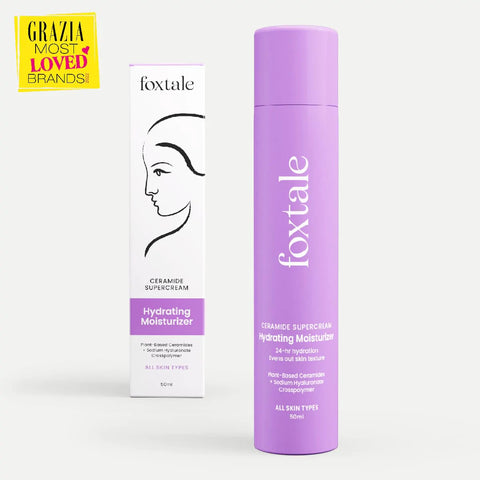
Buy Now: Rs 445/-
4) Protect with SPF
Your entire skincare routine will be ineffective if you don't apply sunscreen. When you're out in the sun the entire day, you are exposing yourself to harmful UV rays, which can have a harmful impact on the skin. Protecting yourself with sunscreen, like Foxtale's dewy finish sunscreen, will shield your skin from UVA+ UVB rays and reverse free radical damage.

Buy Now : Rs 675/-
Conclusion
Vitamin C serum can benefit numerous skin types and is regarded as a great weapon to possess against anti-ageing. Incorporating the serum into your skincare routine offers you a plethora of benefits, from fading hyperpigmentation to promoting collagen production; this versatile ingredient deserves a place in your skincare cupboard. To be on the safer side, it is recommended to conduct a patch test first to ensure your skin has no adverse reaction to the product. Always ensure to pair Vitamin C serum with sunscreen to reap the maximum benefits!
FAQs
1. At what age can I start using Vitamin C?
Ans: To be honest, there is no right age at which you can start using Vitamin C serum in your skincare routine. A teenager’s skin is a lot more different than an adult's or an aged person, and it’s safe to say both can benefit from Vitamin C serums, given their target concerns. If you feel the need to prevent sun damage or have acne scars that you want to fade, use a Vitamin C serum, and you can easily benefit from it, be it at the age of 18 or 40!
2. What % of vitamin C should be used?
Ans: It is recommended to use Vitamin C serum which contains 15% L-ascorbic acid, which is the purest and most potent form of the vitamin. In addition, products containing L-ascorbic acid penetrate skin tissue and boost the skin's collagen production, giving your skin a youthful appearance.
3. How to store vitamin C serum?
Ans: Vitamin C serum should be stored in a cool and dry place to prevent it from oxidizing. You should aim to avoid exposing your serum to sunlight.
4. How long does Vitamin C serum take to work?
Ans: It usually depends on the type of Vitamin C you are using; it can easily take around 1 to 4 months or 4 to 12 weeks for it to work and show results. While L-Ascorbic Acid works faster, other variants might take longer than that. However, consistency and concentration in using a product play an important role in efficacy. For example, if you use high concentrations regularly and top it off with good sunscreen, it will give you faster results.
5. How do I choose Vitamin C serum for my skin?
Ans: Based on your skin type, skin tolerance, preference of formulation, and skin concern, you can choose the best Vitamin C serum for your skin. For mostly all skin types, L-Ascorbic acid is great and works faster as it is a pure and potent formula. However, if you struggle with very sensitive skin, you might have other options.
If you are a beginner using Vitamin C serum and your skin cannot tolerate high concentrations, go for a serum with no more than 5% concentration to start with. Similarly, if your skin is used to it and can tolerate a high percentage, go for 15-20% concentration, as lower than that may not work for you.
6. What can you not mix with Vitamin C?
Ans: You should not mix Retinol, Benzoyl peroxide, AHA’s, and BHA’s with your Vitamin C.
7. Should you put Vitamin C on wet skin?
Ans: Although it is always advisable to use your skincare products, especially hydrating serums on damp skin, Vitamin C serum, or any other active such as AHA/BHA should never be used like that. Always use it on dry skin. For best results, use it when your skin is dry right after washing your face. This is so because if you use it on wet skin, the acid will come in contact with water which will neutralize the action and make it weaker.
8. Should you use Vitamin C during the day or at night?
Ans: There needs to be more clarity about whether one should use Vitamin C serum during the daytime or night time. Those who use many daily actives believe that daytime is good enough, and others find night time more comfortable. However, you should know that Vitamin C serum can be used both during the day and at night! To get the maximum benefits of it in the daytime, make sure to use sunscreen to fight free radicals and prevent sun damage. At night, use a good sodium hyaluronate-based moisturizer and the serum to balance it out.
9. Do I need a moisturizer and sunscreen after Vitamin C?
Ans: Yes. You must use a hydrating, barrier-repair moisturizer and a protective sunscreen after applying your Vitamin C serum to get the most benefits and avoid mishaps. The correct way to use a Vitamin C serum is:
- Firstly, wash your face properly with a gentle face wash such as Foxtale’s Daily Duet Cleanser. It makes sure your skin is all ready to absorb in products applied afterwards.
- Next up, use a Vitamin C serum on a clean face.
- Then, use a skin barrier repair moisturizer like Foxtale’s Ceramide Supercream as a protective layer.
- Follow it up with a sunscreen that has an SPF of 50+ and PA++++! When you use the C For Yourself serum & Cover-Up Sunscreen together, you are double-protecting your skin from harmful UV rays. This powerful duo is known to enhance each other’s efficiency, and it works best on fading dark spots as well as premature ageing.
10. What happens if you use Vitamin C without sunscreen?
Ans: ‘Magical duo’ is the word that comes to our mind when we think about pairing Vitamin C with Sunscreen, and we are here to tell you not to miss out on this opportunity! When you are using a Vitamin C serum, it is to combat issues like hyperpigmentation or dark spots, it works by lifting the pigment and revealing fresh and new skin. And this is why using sunscreen makes the process a lot easier by further protecting your fresh skin from UV rays. If you do not use them together, it is only going to make the situation worse. It will make the spots even more pigmented.
11. Should you refrigerate your Vitamin C serum?
Ans: When storing your Vitamin C serum, the best way to do it is to keep it in the dark, cool place to ensure it doesn’t come in contact with sunlight. If your serum comes in contact with sunlight (for a longer duration), it may get oxidized, and it will have an adverse impact on your skin as it has gone bad.
Packaging of a Vitamin C serum plays an important role with respect to storage. If the serum is well packed in an opaque bottle, you can keep it at room temperature as it is already pretty safe from the sunlight. However, glass, transparent bottles may need to be stored in the refrigerator.
12. How do you know if Vitamin C serum is oxidized?
Ans: You can easily determine if your Vitamin C serum is oxidized by looking at its color and smell. The original color of the Vitamin C serum is usually transparent, but when it is oxidized, its color is changed to yellow or brown (darker). Also, if your Vitamin C serum starts to smell unpleasant after a few months, you should know that it is oxidized and cannot be used anymore.
13. What can you do to stop Vitamin C serum from oxidizing?
Ans: There are two important things that you need to take care of if you don’t want your Vitamin C serum to oxidize. The first one is storing it in a cool, dark place and away from sunlight as much as possible. And the second one is buying a serum that has opaque packaging.
The Foxtale’s C For Yourself Vitamin C serum is what you would expect from a good Vitamin C serum. It has opaque packaging that doesn’t oxidize, lasts longer, and ensures you fully use up its goodness.
The Ultimate Guide to Pigmentation Treatment at Home: A Step-by-Step Routine
Is Niacinamide Good for Sensitive Skin with Dark Spots?
These articles are reviewed and written by Foxtale's content and skincare research team. Our content is developed using published skincare research, dermatologist guidance, ingredient studies, and consumer education principles to help readers make informed skincare decisions.
Shop
the story
BESTSELLER
Vitamin C Serum
Fades pigmentation & brightens skin
See Reviews
₹ 645
GLOW20
Most Read
Is Niacinamide Good for Sensitive Skin with Dark Spots?
10 min read

IN THIS ARTICLE
- 01
- 02
- 03
- 04
- 05
- 06
- 07
- 08
- 09
- 10
- 11
Quick Answer: Yes, niacinamide is one of the best ingredients for sensitive skin with dark spots. It fades post-inflammatory hyperpigmentation by inhibiting melanin transfer, calms inflammation without causing irritation, and strengthens the skin barrier - all at the same time. Unlike most brightening actives (vitamin C, AHAs, retinol), niacinamide has virtually zero irritation potential, making it the go-to treatment for skin that reacts to everything else.
Sensitive skin with dark spots is a frustrating combination. The very ingredients that fade pigmentation - vitamin C, retinol, AHAs - are often the same ones that cause redness, stinging, and flare-ups in reactive skin. You want brighter skin, but every time you try something strong enough to work, your skin pushes back.
Niacinamide sits in a different category entirely. It's gentle enough for the most reactive skin types, yet clinically proven to fade dark spots, calm redness, and strengthen the barrier that sensitive skin constantly struggles to maintain. If your skin has been telling you no to every brightening ingredient you've tried, niacinamide is almost certainly the yes you've been looking for.
Why Sensitive Skin Struggles with Dark Spots
Sensitive skin is characterised by a compromised or reactive skin barrier. When the barrier is weak, skin is more permeable - meaning environmental triggers, actives, and even water loss cause disproportionate inflammatory responses. This is the core problem.
Here's why that makes dark spots worse: post-inflammatory hyperpigmentation (PIH) is triggered by inflammation. Every time sensitive skin reacts to a product, sun exposure, or a breakout, the inflammatory signal activates melanocytes - the pigment-producing cells in the skin - to overproduce melanin. That excess melanin transfers to surrounding keratinocytes and shows up as a dark mark.
Sensitive skin is caught in a loop: inflammation creates dark spots, but most dark spot treatments cause more inflammation. Niacinamide breaks that loop by working on both ends simultaneously.
Did You Know? Post-inflammatory hyperpigmentation is more common and more persistent in deeper skin tones. For Indian skin specifically, where melanocytes are naturally more active, even mild inflammation from a breakout, friction, or product reaction can leave marks that take weeks to months to fade without targeted treatment.
How Niacinamide Works on Dark Spots
Niacinamide fades dark spots through a specific, well-documented mechanism: it inhibits the transfer of melanosomes (melanin-containing vesicles) from melanocytes to the surrounding keratinocytes (Hakozaki et al., 2002 - British Journal of Dermatology). Less melanin transferred means less visible pigmentation at the skin's surface.
This is different from how other brightening ingredients work. Vitamin C inhibits the enzyme tyrosinase, which produces melanin in the first place. AHAs exfoliate pigmented skin cells from the surface. Niacinamide interrupts the transfer step - the handoff between the cell that makes melanin and the cell that carries it to the surface. For a complete guide on niacinamide for dark spots and pigmentation - including what types of pigmentation it works best on - that covers the full scope.
Why Niacinamide Is Specifically Safe for Sensitive Skin
Most brightening ingredients have a catch for sensitive skin types:
Niacinamide has no acidic pH requirement, no exfoliating action, and no cell-turnover acceleration that causes peeling or purging. It works within the skin's normal biological processes - it simply redirects a step that already happens.
Beyond its gentleness, niacinamide actively repairs what sensitive skin needs most: the barrier. It stimulates ceramide synthesis in the stratum corneum - the lipid molecules that hold skin cells together and prevent moisture and irritants from moving through the skin freely (Gehring, 2004 - Journal of Cosmetic Dermatology). A stronger barrier means less reactivity, less inflammation, and - crucially - fewer new dark spots forming.
For the full guide specifically on how to use niacinamide for sensitive skin, including concentration guidance and what to avoid pairing it with on reactive skin, that's covered in detail.
What Not to Pair with Niacinamide on Sensitive Skin
1. Avoid high-concentration AHAs (above 10% glycolic) in the same routine - use niacinamide in AM, AHA at night only if you're also introducing them.
2. Don't layer niacinamide directly over vitamin C if your skin is reactive - separate them into AM and PM, or use vitamin C in the morning and niacinamide in both AM and PM.
3. Fragrance and essential oils - avoid these in your moisturizer and any other product in the routine; on sensitive skin, fragrance is a common hidden trigger for the inflammation that creates more dark spots.
For a complete reference on how to use niacinamide with other skincare ingredients, every combination and its safety for sensitive skin is covered.
Foxtale 12% Niacinamide Serum: The Right Choice for Sensitive Skin
Foxtale 12% Niacinamide Serum is formulated at a high-purity niacinamide concentration in a lightweight, fragrance-free, water-based base - exactly what sensitive skin needs. No irritating additives. No fragrance. No essential oils. Just the active delivered efficiently in a format that reactive skin can tolerate from day one.
It's non-comedogenic, dermatologically tested, vegan, and cruelty-free - formulated to work for Indian skin across the full sensitivity spectrum.
Try This: Foxtale 12% Niacinamide Serum + Oil Balancing Moisturizer - the two-step routine for sensitive skin with dark spots. Niacinamide fades the marks; cica calms the reactivity; both work without a single irritating ingredient. Fragrance-free, dermatologically tested, vegan, cruelty-free.
Double Encapsulation Technology - Why It Makes Foxtale's 12% Niacinamide Serum Safe for Sensitive Skin
Here's where most people get stuck: the concentration number. 12% niacinamide sounds strong. And if you have sensitive skin, strong usually means risky. So why does Foxtale's 12% Niacinamide Serum work even on reactive, sensitive skin without irritation?
The answer is in the delivery system, not just the ingredient itself.
What Is Double Encapsulation Technology?
Think of it this way. Imagine delivering a very hot cup of tea directly into someone's hands versus wrapping it in two layers of insulation first and letting it gradually warm through. The tea is equally hot either way - but the experience of receiving it is completely different. Double Encapsulation Technology works on exactly this principle.
Foxtale's 12% Niacinamide Serum uses a sophisticated delivery system that encloses Niacinamide in two protective layers. Here's what that actually means:
Layer 1 - The Inner Carrier
Niacinamide (and Azelaic Acid) are first enclosed in a lipid-based inner carrier - typically a lecithin-based structure (lecithin and lysolecithin are both present in the ingredient list). This inner shell protects the actives from interacting directly and immediately with the skin's surface barrier. The ingredient list confirms both lecithin and lysolecithin are used - these phospholipids are the building blocks of the inner encapsulation layer, closely mimicking the lipid composition of your own skin membrane.
Layer 2 - The Outer Shell
A second, outer protective layer then encases the inner carrier. This outer shell is what the skin's surface interacts with first. It breaks down gradually, rather than all at once, regulating the rate at which the active ingredients are released.
Did You Know? Lecithin - one of the key encapsulation materials in Foxtale's formula - is a phospholipid that structurally resembles your skin's own cell membranes. This makes it one of the most skin-compatible carriers available. The skin recognises it as "native" and allows encapsulated actives to pass through the barrier more readily than synthetic delivery vehicles would.
Why Double Encapsulation Changes the Equation for Sensitive Skin
Standard high-concentration serums dump their full active load onto the skin's surface in one go. All 12% of the niacinamide hits the stratum corneum at the same time. For most skin types this is fine. For sensitive skin - where the barrier is already thinner and more reactive - that immediate, full-dose contact is what causes the redness and stinging that people associate with high-strength serums.
Double Encapsulation Technology gradually deposits the actives into the skin instead of hitting the surface barrier all at once. The two protective shells break down in sequence - first the outer, then the inner - releasing niacinamide and azelaic acid at a controlled rate over time. This means:
1. No concentration spike at the surface - the skin receives a steady, gradual dose rather than an immediate full hit
2. Deeper penetration - because the active is protected in a carrier that resembles skin's own lipid structure, it travels further into the epidermis before being released - reaching the exact cell layers where niacinamide does its work on sebum regulation and melanin transfer
3. Sustained 24-hour release - the controlled breakdown of the encapsulation layers means actives are being released throughout the day and night, not just in the minutes after application
4. Minimised irritation - the most common cause of sensitivity reactions to high-strength actives is the sudden large-dose contact at the skin's surface barrier; encapsulation removes that trigger entirely
The encapsulation doesn't dilute the efficacy - it makes it safer. This is the key distinction. 12% niacinamide in a double-encapsulated form is not a weaker version of 12% niacinamide. It's the same active concentration, delivered in a way that the skin can handle without the reactive response.
Pro Tip: If you're new to the serum and have reactive skin, start with 2-3 applications per week and build to daily use over 2-3 weeks. The double encapsulation already reduces the irritation risk significantly - but a gradual introduction gives your barrier time to adjust to regular active use, making results even more consistent.
What Else Is in the Formula (And Why It Matters for Sensitive Skin)
The delivery technology is the standout feature, but the rest of the formulation is equally considered for reactive skin.
12% Double Encapsulated Niacinamide
Regulates sebum, inhibits melanin transfer to fade dark spots, reduces inflammation, and strengthens the ceramide barrier - all in one ingredient.
Azelaic Acid
Also delivered via the encapsulation system. Azelaic acid has antibacterial properties against acne-causing bacteria, inhibits tyrosinase (adding a second mechanism for dark spot fading on top of niacinamide's melanin transfer inhibition), and has genuine anti-inflammatory activity - making it one of the few actives with a formal recommendation even for rosacea-prone skin.
Glycerin + Betaine + Glyceryl Glucoside + Allantoin
Four separate hydrating and soothing agents. These aren't fillers - they actively maintain skin hydration during active ingredient use, preventing the tight, dry feeling that high-strength serums sometimes cause. Allantoin specifically is a proven skin-calming ingredient that reduces surface irritation and supports healing.
No parabens. No sulphates. No fragrance. No silicones.
For sensitive skin, fragrance is one of the most common hidden irritants - causing contact sensitisation that looks identical to an active ingredient reaction. This formula contains none of it.
How to Use Foxtale's 12% Niacinamide Serum on Sensitive Skin
Step 1 - Cleanse
Use Foxtale True Clarity Oil and Acne Control Face Wash. Pat skin dry with a clean towel - don't rub.
Step 2 - Apply the serum
2-3 drops spread evenly across the face and neck. Press gently - no rubbing. Let it absorb completely before the next step. On sensitive skin, start with 2-3 applications per week and build to daily use.
Step 3 - Moisturize
Apply Foxtale Oil Balancing Moisturizer after the serum has fully absorbed. The cica in the moisturizer supports barrier repair alongside the serum's active work.
Step 4 - SPF (morning only)
Non-negotiable. Both niacinamide and azelaic acid are targeting pigmentation - UV exposure re-darkens marks faster than any ingredient can fade them.
What to avoid on the same day: Vitamin C, retinol, and AHA/BHA. Not because the combination is unsafe, but because layering multiple strong actives simultaneously puts unnecessary stress on an already-sensitive barrier. Use those on alternate evenings if they're part of your routine.
What to Expect: Dark Spot Fading Timeline
Dark spots fade gradually with consistent niacinamide use. While results vary based on the type and depth of pigmentation, here's a general timeline:
Conclusion
The key here is consistency. Niacinamide's dark spot mechanism requires twice-daily delivery over weeks for melanin transfer inhibition to produce visible results. Skipping days resets the biological signalling. For guidance on what happens when you stop using niacinamide and how to maintain results long-term, that covers everything you need to know.
FAQs
1. Is niacinamide safe for sensitive skin?
Ans. Yes. Niacinamide is gentle, non-exfoliating, and helps strengthen the skin barrier, making it suitable for sensitive skin.
2. Can niacinamide fade dark spots without irritating sensitive skin?
Ans. Yes. Niacinamide helps reduce dark spots by limiting melanin transfer without causing irritation, making it a good choice for sensitive skin.
3. How long does niacinamide take to fade dark spots?
Ans. With consistent twice-daily use, most people notice improvement in 6–8 weeks, with more visible results by 10–12 weeks. Daily sunscreen is essential.
4. What niacinamide concentration is best for sensitive skin?
Ans. A 5% serum is effective and well-tolerated but a 12% niacinamide serum with double encapsulation like the one from Foxtale is also equally effective and suitable for sensitive skin.
5. Should I apply moisturizer after niacinamide serum?
Ans. Yes. Follow with a fragrance-free, ceramide- or cica-based moisturizer to lock in hydration and support the skin barrier.
The Ultimate Guide to Vitamin C Serum: Benefits, Uses, and Tips
Vitamin C for Acne Scars: Benefits, How It Works & Best Way to Use It
These articles are reviewed and written by Foxtale's content and skincare research team. Our content is developed using published skincare research, dermatologist guidance, ingredient studies, and consumer education principles to help readers make informed skincare decisions.
Shop
The Story
Fragrance-Free
12% Niacinamide Clarifying Serum
Deletes 7 signs of acne & acne marks
See Reviews
₹ 645
GLOW20

Oil Balancing Moisturizer with Niacinamide & Cica
8+ hours of oil control + pearlescent glow
See Reviews
₹ 445
GLOW20

Oil & Acne Control Face Wash
Oil & acne-free skin in 3 days
See Reviews
₹ 249
GLOW20
Most Read
Vitamin C for Acne Scars: Benefits, How It Works & Best Way to Use It

6 min read

IN THIS ARTICLE
- 01
- 02
- 03
- 04
- 05
- 06
- 07
- 08
- 09
This article explains how Vitamin C can help fade acne scars, acne marks, and post-inflammatory hyperpigmentation (PIH) by supporting collagen production, brightening skin, and improving overall skin tone. It covers who should use a Vitamin C serum, the best way to apply it, how long it takes to see results, and what types of acne scars it can realistically improve. The guide also shares skincare tips, common mistakes to avoid, and how to pair Vitamin C with ingredients like niacinamide and salicylic acid for better results. Overall, it helps readers build an effective routine for managing post-acne marks while setting realistic expectations about what Vitamin C can and cannot do.
If you're wondering does vitamin C help acne scars, you're not alone. Acne scars, acne marks, and post-acne pigmentation are among the most common skincare concerns, especially for oily and acne-prone skin. While Vitamin C serum for acne scars cannot completely remove deep scars, it may help fade dark spots after acne, improve uneven skin tone, support collagen production, and give skin a brighter, healthier appearance when used consistently.
While most people know that vitamin C is important for healthy skin, it might not go over well with everyone. The bad news is that there's not much you can do about them other than learn to accept them and deal with them head-on. If you're ready to get started on the path to better acne scar management, then keep reading.
What Is Vitamin C and How Does It Help Acne Scars?
Vitamin C is a powerful antioxidant that helps protect skin from environmental damage while supporting collagen production. In skincare, Vitamin C serum benefits include reducing the appearance of acne marks, improving uneven skin tone, fading post-inflammatory hyperpigmentation (PIH), and enhancing skin radiance. While vitamin C is important for healthy skin, it’s also been shown to have anti-psoriatic properties that can help prevent acne and benefit acne-prone skin. In fact, it is known as the holy grail for oily skin and will be a total game-changer for you!
Who Should Use Vitamin C Serum?
A Vitamin C serum is suitable for most skin types, including oily, acne-prone, combination, and normal skin. If your concerns include acne scars, pimple marks, uneven skin tone, or dullness, adding Vitamin C to your daily skincare routine may help improve overall skin appearance.
How and when to use vitamin C serum
Many people ask when to use Vitamin C serum or whether it should be used in the morning or at night. Dermatologists generally recommend applying Vitamin C after cleansing and before moisturizer. Morning application is especially beneficial because antioxidants help defend skin against environmental stressors. Always finish with broad-spectrum sunscreen to prevent UV-induced pigmentation.
- Most people think of vitamin C as a moisturizer – but that’s not the only thing it can do. Add 1-2 drops of vitamin C serum to 1-2 drops of your favorite acne treatment – along with other actives like benzoyl peroxide, salicylic acid, or tea tree oil.
- You can include Vitamin C in your morning or night routine. Do ensure to use a glow cleanser that is gentle on your skin before applying a Vitamin C serum. If you have sensitive skin, start with a small amount and test out the skin sensitivity before adding more ingredients.
- UV rays from the sun can photodegrade vitamin C in the skin, so it’s important to keep it out of the sunlight. If you’re not willing to risk photodamage, you can also add vitamin C to an oil-free moisturizer.
How Long Does Vitamin C Take to Fade Acne Scars?
One of the most common questions people ask is how long does Vitamin C take to fade acne scars. The answer depends on the type of acne scar, your skin type, the concentration of Vitamin C, and how consistently you use it. While Vitamin C serum cannot erase deep acne scars overnight, regular use may help fade acne marks, post-inflammatory hyperpigmentation (PIH), and uneven skin tone over time.
Week 2: Your skin may start to look brighter and more radiant, with improved hydration and a healthier overall appearance.
Week 4: With consistent use, some people may notice early improvements in post-acne pigmentation, mild dark spots after acne, and a more even-looking skin tone.
Week 8: Continued use may help visibly reduce the appearance of acne marks, improve overall skin texture, and support collagen production, making skin look smoother.
Week 12: With daily application and proper sun protection, many users notice more noticeable improvements in acne pigmentation, skin brightness, and overall complexion. However, deeper acne scars such as ice pick, boxcar, or rolling scars generally require dermatologist-recommended treatments in addition to topical skincare.
For the best results, apply your Vitamin C serum consistently, pair it with a moisturizer, and use a broad-spectrum sunscreen every morning to help prevent existing acne marks from becoming darker.
Pro Tip: Vitamin C helps fade acne marks and post-acne pigmentation, while salicylic acid targets active acne by unclogging pores and reducing excess oil. If you're dealing with both breakouts and acne scars, using these ingredients correctly can help address both concerns. Read More: Vitamin C and Salicylic Acid: A powerful duo for Acne-Prone Skin?
Why Include Vitamin C in Your Skincare Routine?
You must be wondering, "Why do I need to incorporate a vitamin C serum in my routine when I could just consume food products containing this vital vitamin?" Unlike dietary Vitamin C, topical Vitamin C delivers the ingredient directly where it's needed. This makes it especially effective for addressing acne pigmentation, dark spots after pimples, uneven skin tone, and dull-looking skin. Although you might be having Vitamin C-rich foods, it does not necessarily guarantee it's going straight to your skin. However, using a serum is the most direct way your skin can reap its benefits.
How Does Vitamin C Help Acne Scars?
To improve search intent naturally, expand this section with four short H3s:
- Reduces Acne Marks and Pigmentation – Include keywords like vitamin C for acne marks, vitamin C for pigmentation, and fade acne marks.
- Supports Collagen Production – Explain how Vitamin C supports collagen production, improves skin repair, and enhances skin texture.
- Brightens Dull Skin – Mention that Vitamin C acts as a brightening serum and helps achieve glowing skin.
- Helps Reduce Redness – Cover how it may reduce acne redness and improve the appearance of post-inflammatory erythema (PIE).
Can Vitamin C Remove Acne Scars Permanently? (Vitamin C for Acne Scars & Hyperpigmentation)
Vitamin C for acne scars cannot permanently remove deep acne scars such as ice pick, boxcar, or rolling scars. However, when used consistently, vitamin C can help fade acne scars, reduce post-inflammatory hyperpigmentation (PIH), and improve overall skin tone and texture. It is especially effective for brightening dark spots and supporting skin healing, making it a popular option for those looking to treat acne scars and hyperpigmentation naturally over time.
Did You Know? While Vitamin C is known for brightening skin and fading acne marks, Niacinamide helps control excess oil, strengthen the skin barrier, and reduce the appearance of pores. Using both ingredients together can create a more effective routine for acne-prone skin. Read More: Vitamin C vs Niacinamide: Which Serum Is Better for Acne Scars and Pigmentation?
Our Recommendation: A Vitamin C Serum for Acne Scars and Dark Spots
If you're looking for a Vitamin C serum for acne scars, post-acne pigmentation, or uneven skin tone, choose a formula that combines effective brightening ingredients with a lightweight texture suitable for daily use.
Foxtale's 10% Vitamin C + Glutathione Advanced Brightening Serum is formulated with 10% Vitamin C, Glutathione, and Niacinamide to help reduce the appearance of dark spots, support a brighter-looking complexion, and improve overall skin radiance. Its fast-absorbing, non-greasy formula layers comfortably under moisturizer and sunscreen, making it a great addition to both morning and evening skincare routines for oily, combination, and acne-prone skin.
Mistakes to Avoid
- Skipping sunscreen
- Using oxidized Vitamin C
- Applying too much product
- Mixing too many active ingredients at once
- Not using a moisturizer
- Expecting overnight results
Summary
Acne can be a really challenging issue to tackle, but Vitamin C serves as a powerful tool to fight it off. If you have acne scars, it’s even more important to work on your skincare routine to help manage the condition and prevent new outbreaks.
Vitamin C not only helps with acne scars, but it can also help with other skin conditions, such as wrinkles and dry skin. While most people know that vitamin C is important for healthy skin, it might not go over well with everyone. The only way to truly get a full grasp of how vitamin C helps with acne scars is to test it out for yourself.
FAQs
1.Which Vitamin C is best for acne-prone skin?
Ans: Include vitamin C serum in your skincare routine for the best results when using it to treat acne. Serum-based topical vitamin C is more efficient than creams or toners. Look for products that have L-ascorbic acid, the vitamin's active form.
2. Does Vitamin C help in clear skin?
Ans: Using Vitamin C regularly reduces the appearance of fine lines and wrinkles on the face and neck. This helps in enhancing the overall texture and look of the skin.
3. Should Vitamin C be used during the day or at night?
Ans: It is recommended to use Vitamin C during the day.
4. Can Vitamin C clog my pores?
Ans: No, In fact, topical application of Vitamin C helps unclog pores, preventing the formation of whiteheads, blackheads, and acne.
5. Can I use Vitamin C Serum everyday?
Ans: Yes, you can use Vitamin C Serum daily. The efficacious ingredient soothes inflammation, neutralizes free radicals, and boosts Collagen production – elevating overall skin health.
6. What is the best routine to fade acne scars with Vitamin C?
Ans:
- Start by gently cleansing your skin with Foxtale’s Acne Control Face Wash. Salicylic Acid in the cleanser possesses mild astringent properties that fade acne spots and marks. It also reduces the possibility of future breakouts. Scrub for 30 seconds and rinse off using cold water.
- Dab your face dry and apply 2 to 3 pumps of Foxtale’s Vitamin C on your face. Use a light hand to avoid any stress or strain on the skin.
- After the serum sinks in, use a generous slather of moisturizer to seal the treatment. For oily or acne-prone skin, we recommend Foxtale’s Oil Free Moisturizer. It contains Niacinamide that blots excess oil and prevents clogged pores while ensuring an even texture. Moreover, Hyaluronic Acid and Marine Extracts give a big boost of hydration to the skin.
Dr. Ramesh Surianarayanan, Head- R&D (Foxtale)
Bringing over three decades of experience in cosmetic science and personal care innovation, he currently leads product innovation, formulation development, and efficacy testing at Foxtale. At Foxtale, he focuses on developing high-performance skincare products specifically designed for Indian skin, with a strong emphasis on safety, efficacy, and consumer needs. Prior to Foxtale, he led R&D and formulation initiatives at leading companies including Unilever and Himalaya, building extensive expertise in skincare formulation and scientific product development.

A skincare and beauty content writer passionate about creating research-backed content on skincare, beauty, wellness, and lifestyle. She regularly studies dermatologist recommendations, ingredient research, clinical findings, and industry trends to deliver accurate and actionable insights. Through her writing, she helps readers navigate skincare routines, understand ingredients, address common skin concerns, and make informed choices for healthier skin and overall well-being.
Shop
the storyBESTSELLER
Vitamin C Serum
Fades pigmentation & brightens skin
See Reviews
₹ 645
GLOW20

Hydrating Hyaluronic Acid Serum
Brighter and plumper skin
See Reviews
₹ 549
GLOW20
Most Read
You may also like